Solar energy is becoming a central operating layer in smart energy systems. The question is no longer only, “Can solar panels produce electricity?” It is “what role does solar energy play in smart energy systems”? Solar photovoltaic power supplies local, low-carbon electricity while digital controls coordinate panels, batteries, electric vehicles, and flexible demand. A rooftop system can charge a home battery at noon, then support evening cooking and lighting. That simple shift reduces grid pressure.
The International Energy Agency reported that global solar PV capacity reached more than 1,400 gigawatts by the end of 2023. Its Renewables 2024 analysis expects solar PV to provide most new renewable capacity through 2030. IRENA’s Renewable Power Generation Costs in 2023 also found that utility-scale solar remained among the lowest-cost new power sources worldwide. Fatih Birol, Executive Director of the IEA, stated, “The world is entering a new energy economy, marked by the rapid expansion of clean energy technologies.” His observation places solar within a broader transformation, not as a standalone technology.
Still, the picture is imperfect. Solar output falls after sunset and changes with clouds. Poor forecasting can create balancing problems. Smart inverters, storage, demand response, and stronger distribution networks must work together. Real projects reveal this clearly: a battery may fill during bright afternoon hours, yet an evening heatwave can quickly consume its stored energy. Therefore, solar’s importance depends on integration, data quality, and responsible system design. The technology is powerful, but not self-sufficient.
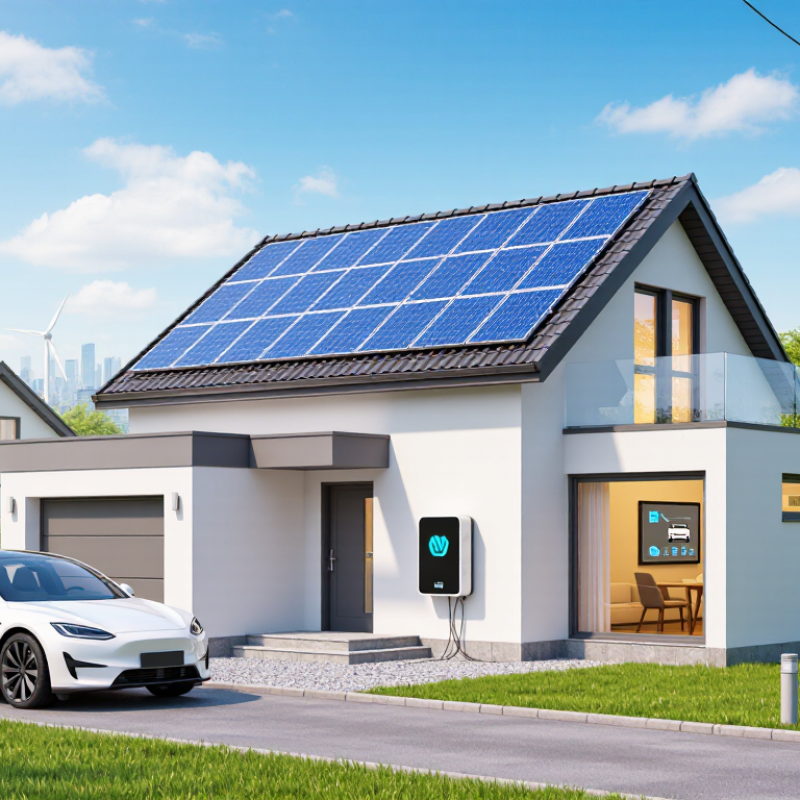
Smart energy systems connect solar panels, batteries, electric vehicles, buildings, and the power grid through digital controls. Sensors measure electricity use, voltage, temperature, and battery condition in near real time. An energy management platform then adjusts supply and demand.
That is the core.
A home may produce solar power at noon, store excess electricity, and release it during the evening peak. In a commercial building, software can delay water heating or cooling when the grid is under pressure. Forecasting tools use weather and consumption data to estimate tomorrow’s solar output. Automated demand response can then reduce unnecessary loads without interrupting essential services.
The system is not simply “solar plus software.” It requires secure communication, clear operating rules, and accurate measurements. The International Energy Agency reported in Electricity 2024 that renewables could provide more than one-third of global electricity by 2025. This growth increases the need for flexible networks.
The International Renewable Energy Agency recorded about 346 gigawatts of new solar capacity in 2023, showing how quickly variable generation is expanding. Yet forecasts remain imperfect. A cloud bank can lower output within minutes. Batteries also have limited duration and gradually lose capacity. Real-world operators must therefore combine automation with human review, especially during extreme weather or equipment failure. Mistakes still happen. Designing for them is part of building a reliable smart energy system.
Solar energy matters in smart energy systems because it turns electricity generation into a flexible, data-driven process. According to the International Renewable Energy Agency’s Renewable Capacity Statistics 2024, global solar capacity reached about 1,419 GW in 2023. Solar is no longer a minor supplement. It is becoming a central grid resource.
Smart grids connect solar panels with digital meters, weather forecasts, batteries, and automated controls. A household may produce excess power at noon, store it in a battery, and use it after sunset. Grid operators can also adjust demand, such as water heating or electric-vehicle charging, when solar output is high. The International Energy Agency reports that the world must add or upgrade about 80 million kilometres of electricity grids by 2040. That scale demands better forecasting and faster control.
Clouds remain a stubborn problem. Solar output can fall sharply within minutes, especially across dense urban areas. Operators therefore need local voltage monitoring, flexible storage, and fair rules for exporting electricity. In practice, forecasts still miss sudden weather changes. That weakness deserves attention. A smart grid is not automatically a reliable grid; its performance depends on maintenance, cybersecurity, accurate data, and trained technicians. The IEA’s Electricity Grids and Secure Energy Transitions report also stresses stronger investment in grid flexibility. Without it, more solar may create congestion instead of resilience.
Solar power improves energy efficiency by producing electricity close to where it is consumed. A rooftop array can supply daytime loads directly, reducing transmission losses and grid demand. In a small office, panels may run ventilation, computers, and water pumps during bright hours. This timing matters. Energy use and generation can match.
With smart meters and energy-management software, systems can shift flexible tasks toward sunny periods. A battery can store surplus electricity for evening lighting. Automated controls can also reduce unnecessary cooling when rooms are empty. These measures turn solar generation into a coordinated energy resource, rather than a passive installation.
Good planning requires more than counting sunny days. Engineers examine roof orientation, shading, seasonal output, local load profiles, and battery losses. A shaded panel can underperform, while an oversized battery may add cost without improving efficiency. Interval-meter data is more dependable than guesses based on monthly bills. Solar can also support resilience during grid interruptions. A properly designed backup system may keep essential circuits running, but safety controls must isolate the building from the grid. Dust, heat, and aging components gradually reduce performance.
The technology has limits. Solar output falls during storms and disappears at night. Batteries require materials, maintenance, and responsible end-of-life handling. Not every roof benefits equally. Sometimes insulation or efficient motors should come before more panels. That answer feels less exciting, but it is often more accurate.
Solar power produces electricity with very low lifecycle greenhouse gas emissions compared with fossil-fuel generation. In smart energy systems, solar generation can be combined with forecasting, battery storage, demand response, and efficient digital controls to reduce emissions, improve energy efficiency, and support cleaner electricity networks.
Data shown are median lifecycle greenhouse gas emissions estimates in grams of CO₂-equivalent per kilowatt-hour, based on values reported by the Intergovernmental Panel on Climate Change.
Why Is Solar Energy Important in Smart Energy Systems?
Challenges in Managing Solar Energy Variability
Solar energy supports smart energy systems by producing electricity close to where people use it. Yet its output changes with clouds, seasons, temperature, and daylight. A bright afternoon can become unexpectedly dark within minutes. That shift can challenge grid stability, especially when solar power supplies a large share of demand.
Reliable management requires accurate forecasting, flexible storage, and responsive electricity loads. Weather sensors can track cloud movement, while software estimates production minutes ahead. Batteries can absorb excess power at noon and release it after sunset. Demand response can also move water heating or cooling to periods of strong generation. These tools help, but they are not perfect. Forecasting errors still occur during fast-moving storms.
Grid operators must also manage voltage changes and local congestion. A neighborhood may generate more electricity than its wires can safely carry. Curtailment may become necessary, although it wastes available clean power. Better distribution controls can reduce this waste, but they require skilled planning and regular maintenance. A practical weakness remains: some systems depend too heavily on ideal weather data. Real conditions are messier. Engineers should test their plans against cloudy mornings, sudden heat, equipment faults, and unusual demand. Small details matter.
| Data Dimension | Typical Value or Range | Variability Challenge | Impact on Smart Energy Systems | Common Management Response |
|---|---|---|---|---|
| Daily availability | 0% output at night; approximately 8–16 daylight hours per day | Solar generation follows the day–night cycle and cannot provide continuous output without storage or complementary generation. | Evening demand can rise after solar production declines, creating a steep net-load ramp. | Time-of-use demand response, battery storage, flexible generation, and interconnection with neighboring areas. |
| Annual capacity factor | Approximately 10–30% | Installed capacity is not continuously available at its maximum rating because of night, clouds, seasonal sunlight, and system losses. | Grid planning must distinguish between installed solar capacity and dependable capacity during peak-demand periods. | Resource diversity, capacity planning, energy storage, and coordinated operation with dispatchable resources. |
| Cloud-driven short-term ramp | Output can change by roughly 10–60% of rated capacity within 10 minutes at some sites | Fast-moving clouds can cause rapid changes in solar irradiance and photovoltaic output. | Voltage, frequency, and balancing requirements can increase, especially in areas with high solar penetration. | Fast reserves, inverter controls, geographic aggregation, short-term forecasting, and flexible demand. |
| Day-ahead forecast error | Commonly about 5–15% of forecast output, depending on weather and system scale | Cloud cover, storms, haze, and local weather conditions can differ from forecast assumptions. | Unexpected deviations may require additional balancing energy and can increase operating costs. | Probabilistic forecasts, frequent forecast updates, reserve scheduling, and real-time market adjustments. |
| Intra-day forecast improvement | Often reduced to approximately 2–5% shortly before delivery under favorable conditions | Forecast accuracy improves as weather observations become more current, but local cloud behavior remains difficult to predict. | Better short-term information allows operators to reduce unnecessary reserves and improve dispatch decisions. | Satellite data, sky-imaging systems, on-site sensors, machine-learning models, and rolling dispatch updates. |
| Solar-plus-storage duration | Commonly 1–4 hours for short-duration grid balancing | Short-duration storage can shift solar energy into evening hours but may not cover prolonged cloudy periods or seasonal gaps. | Storage sizing must match the duration and timing of the system’s flexibility requirement. | Use multiple storage durations, maintain interconnection flexibility, and combine batteries with other energy resources. |
| Battery response time | Sub-second to several seconds for automated power response | Storage can respond quickly, but its energy capacity and state of charge are limited. | Fast response can reduce short-term frequency deviations and smooth rapid solar ramps. | Automatic frequency control, ramp-rate limits, state-of-charge management, and coordinated battery dispatch. |
| Transmission and geographic diversity | Cloud impacts are often less correlated across widely separated locations | A local cloud event may reduce output in one area while solar production remains stable elsewhere. | Concentrated solar generation can create larger local fluctuations and network congestion. | Geographically distributed generation, stronger transmission links, and coordinated regional balancing. |
| Midday overgeneration risk | Highest during sunny, low-demand periods with substantial solar penetration | Solar output may exceed instantaneous demand or available export capacity. | Excess energy can lead to curtailment, negative pricing, or reduced utilization of solar assets. | Flexible loads, thermal storage, electric-vehicle charging, hydrogen production, exports, and battery charging. |
| Inverter-based grid behavior | Power-electronic inverters respond in milliseconds to seconds | Large amounts of inverter-connected generation can reduce the relative contribution of conventional rotating machines to system inertia. | Fault response, voltage control, frequency stability, and system protection may require updated operating practices. | Grid-support functions, voltage and frequency ride-through, synthetic inertia, advanced protection, and system-strength planning. |
| Seasonal variation | Solar resource is generally higher in summer and lower in winter in many regions | Seasonal changes in sunlight, weather, and day length may not align with seasonal demand patterns. | Annual energy adequacy cannot be assessed using daily storage alone. | Long-duration storage, demand management, diversified generation, transmission, and seasonal energy planning. |
Solar power matters in smart energy systems because it produces electricity close to where people use it. Rooftop panels can support homes, schools, and local clinics during daytime demand. Smart meters then match solar production with heating, cooling, and water-pumping needs. This reduces pressure on transmission networks and can improve resilience during outages.
Future systems will depend on better forecasting and flexible storage. Sensors may combine cloud movement, temperature, and household demand data every few minutes. Batteries can store midday electricity for evening cooking or medical equipment. Electric vehicles could also return power to buildings when necessary. However, battery manufacturing, recycling, and mineral supply still require careful environmental oversight. Progress is not automatically sustainable.
Practical experience shows that software cannot solve every problem. A sudden storm can defeat a confident forecast. Human operators still need clear alarms and safe manual controls. Future designs may use digital twins to test failures before construction begins. Solar panels could share land with crops, reducing competition for open space. Lightweight panels may also serve balconies, sound barriers, and emergency shelters. Yet efficiency gains often create new maintenance demands. Dust, heat, damaged cables, and uneven panel aging remain ordinary field problems. Engineers should measure these details, not hide them behind impressive dashboards.
It connects solar panels, batteries, electric vehicles, buildings, and the power grid. Digital controls coordinate them. Sensors track electricity use, voltage, temperature, and battery condition.
Software adjusts energy use and storage according to current conditions. A home may store extra midday electricity, then use it during evening demand. Timing matters.
Clouds can reduce solar output within minutes. Forecasting tools, batteries, and flexible loads help manage the change. Forecasts can still be wrong.
Batteries absorb excess electricity during bright hours. They release stored energy after sunset or during high demand. Their duration is limited, and capacity slowly declines.
Yes. Controls can delay water heating or cooling when the grid is stressed. Essential services should continue, but automation needs careful settings.
Weather data helps estimate future solar production. Cloud movement and temperature affect output. A sunny forecast may still miss a fast-moving storm.
A neighborhood may produce more electricity than its wires can safely carry. Voltage changes and congestion can follow. Curtailment may waste available clean power.
No. Equipment faults, unusual demand, extreme weather, and measurement errors can disrupt operations. Human review remains necessary. Designers should test imperfect conditions, not only ideal days.
Smart energy systems combine renewable generation, digital sensors, energy storage, automated controls, and responsive consumers to balance electricity supply and demand. Within these systems, solar power serves as a clean and increasingly accessible source of electricity. The question “what role does solar energy play in smart energy systems” can be answered by its ability to reduce dependence on conventional fuels, support local generation, and provide flexible power when connected with intelligent monitoring and storage. Solar panels can feed electricity into smart grids, while advanced controls help distribute energy efficiently according to real-time needs.
Solar energy improves energy efficiency by lowering transmission losses, reducing emissions, and encouraging consumers to manage their usage more carefully. However, changing weather and daylight conditions create challenges in maintaining a stable supply. Smart forecasting, batteries, demand response, and complementary energy sources can help address this variability. Future developments are expected to make solar-powered systems more adaptive, decentralized, and reliable, enabling communities and households to participate actively in a cleaner and more resilient energy network.

3UP Energy